Suriname
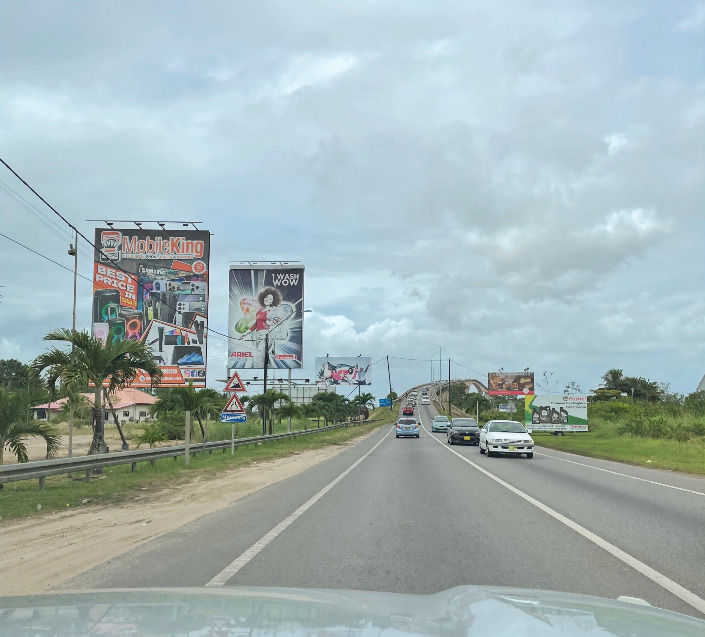
Arriving in Suriname via the last ferry for the weekend, at around 6pm, was to say the least, stressful. The immigration process was friendly and easy going, but slow, and the officers were held up by the young woman who sold car insurance (mandatory) as she also had to crack a few jokes with everyone in the queue. In the end they all worked at the same time, sort of ignoring the protocol, and they were finally free to go home for Friday partying.
We had no such fun to do, initially. We had to find accommodation in the place where the ferry land, to avoid driving in the dark. The ferry landed in a small town called Albina Town. There was one hotel, luckily with a gated car park, but still under construction. So we spent the evening with a couple of whiskys, in a not-fully-ready hotel, wondering how we had come to leave French Guiana in such a hurry.
Next morning we moved on to Paramaribo, the capital of Suriname. This was a surprising place, full of Chinese shops (apparently all shops are Chinese run) and casinos. On the way there we filled up with petrol, first, and found out they don't take cards to pay, second. We had no cash. So we spent a couple of hours finding an ATM that took international cards, to get cash out. Then we went back about half an hour to pay the poor guy who was very concerned about not getting the money.
There are many hotels in Paramaribo, but not that many quiet ones. They are more or less all located in the one place, in the one area we saw that has buildings with character and sights to see. A guide took us on a tour around the city and we saw religious buildings of all nominations, next to each other in peace and harmony. Suriname is a real melting pot, and the food is delicious being based on all the cuisines together.
We drove the only roads there are to go, and even one seemingly not going to anywhere in particular. Going from Paramaribo to Nieuw Nickeri, where we spent the last night before getting on another ferry to Guyana, we saw flat landscape with canals and a few villages. It became clear that food is grown on reclaimed land, and the Dutch must have practiced their skills in making seabed into fertile land. The only monkey we've seen since leaving Costa Rica ran across the road, and other than that we saw cows roaming free and the odd group of goats.
We had been resigned to not understand a word in a Dutch speaking country, but it turned out they all speak English. It was good to be able to communicate with people again!